Constructive dismissal (often called “constructive unfair dismissal”) is where you resign because your employer has committed a serious breach of contract that leaves you with no real choice but to leave. In law, resignation in response to a fundamental breach is treated as a dismissal by the employer.
Please note that this page is for general information only. It is not legal advice.
The core legal test
You must usually show that:
- Your employer fundamentally breached a term of your employment contract (express or implied, including the implied term of mutual trust and confidence).
- You resigned in response to that breach.
- You did not wait too long after the breach before resigning (otherwise a tribunal may find you affirmed the contract by carrying on). This is known as “affirming the breach”. As an everyday example, if you ordered a glass of red wine but were given white, you could not drink the whole glass and only then complain it was the wrong one and demand a refund. By finishing it, you have effectively accepted it.
What counts as a “fundamental breach”?
Not all breaches are a breach of the written terms of your employment contract. The law implies a duty of “mutual trust and confidence” which in plain English means both you and your employer must not, without reasonable and proper cause, do anything likely to destroy or seriously damage the working relationship. Put simply, no conduct that undermines trust (e.g. but not limited to, humiliating treatment, discriminating against you, violence towards you, bad-faith decisions, ignoring grievances).
Further examples that tribunals commonly treat as potentially fundamental include:
- Non-payment of wages or repeated late payment.
- Unilateral changes to key terms (for example, pay, hours, place of work) without consultation or contractual basis.
- Demotion or significant loss of status without proper reason.
- Bullying or harassment that the employer fails to address.
- Unsafe working conditions or serious health and safety failings.
- Bad-faith disciplinary action or a seriously flawed investigation that undermines trust and confidence.
- Discrimination.
Service requirements (time served) and the current law
- Ordinary unfair dismissal claims (which include constructive dismissal) currently require two years’ continuous service before you can claim, unless an exception applies. This is the present position.
- Day-one exceptions: Some dismissals are automatically unfair and do not need two years’ service (for example, dismissals connected to whistleblowing, certain health and safety reasons, pregnancy or maternity). These are separate routes and may sit alongside a constructive dismissal argument.
- Discrimination: If you resign because of discrimination (including harassment, failure to make reasonable adjustments, victimisation, pregnancy and maternity discrimination, sex, race, disability, age, religion or belief, sexual orientation, gender reassignment, or marriage and civil partnership), you can bring a stand-alone Equality Act 2010 claim without needing two years’ service. In practice, a Claimant in this position may:
- Pursue an Equality Act claim as a day-one right; and
- Also claim wrongful dismissal (notice pay) where the employer’s breach ends the contract; and
- Bring constructive unfair dismissal as well, if the two-year service requirement is met.
Reforms you should know about
The Employment Rights Act 2025 is bringing major changes to unfair dismissal rights:
- Instead of removing the qualifying period entirely, the Act reduces the qualifying period from 2 years to 6 months (with existing day-one protections remaining for discrimination and “automatically unfair” reasons). Current published roadmaps/briefings indicate this change is expected to commence in 2027.
Always check the status at the time you plan to act, because the timeline and detail may change during the legislative process.
How You Could protect yourself before resigning
- Raise the issue in writing (grievance or email). Be specific about what happened and why it breaches your contract or trust and confidence.
- Give the employer a chance to fix it where realistic. This does not stop you resigning if the situation is intolerable, but it often strengthens your position.
- Keep records: timelines, messages, witnesses, policies, and notes of meetings.
- Take advice early. The timing of your resignation is critical. If you delay too long after the breach, you may be held to have affirmed the contract.
Time limits
If you resign and intend to claim constructive dismissal, you must start ACAS Early Conciliation within three months less one day of the effective date of termination (your final day) and then issue your Employment Tribunal claim within a month of receiving your ACAS Early Conciliation Certificate. Get advice quickly so you do not miss the deadline.
As we often mention, do not fall into the trap of believing your three months less one day runs from the date your employer concludes any grievances or appeals.
If your constructive dismissal case rests on discrimination, work to the three months less one day deadline from the discriminatory act (or last in a series), not your final day of employment.
Most importantly, do not leave it until the last minute!
Action plan if you are considering resignation
- Get advice on the strength of your case and your options.
- Write a clear grievance setting out the breach and the remedy you seek.
- Gather documents: contract, emails, messages, rotas, pay slips, policies, and meeting notes.
- Consider alternatives to resignation (for example, agreed changes, mediation, or temporary adjustments).
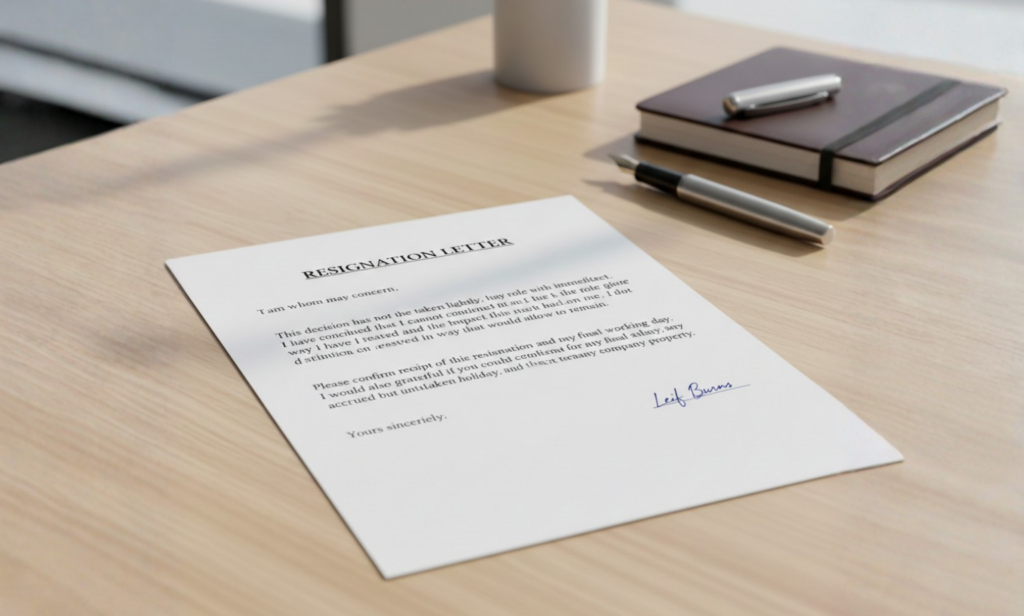
- If resignation is unavoidable, draft a careful resignation letter linking your resignation to the breach and start ACAS Early Conciliation promptly.
Frequently asked questions
If you need advice about constructive dismissal, resigning, or any other employment law issue, Morris Liberti Legal will be pleased to help. Please contact us for a confidential, free initial discussion about your circumstances and the options available.
By telephone: 01449 280 280
By email: enquiries@morrisliberti.com
